Arizona Font: A Versatile Embroidery Design for Branded Merchandise
First Impressions: What Makes Arizona Font Stand Out
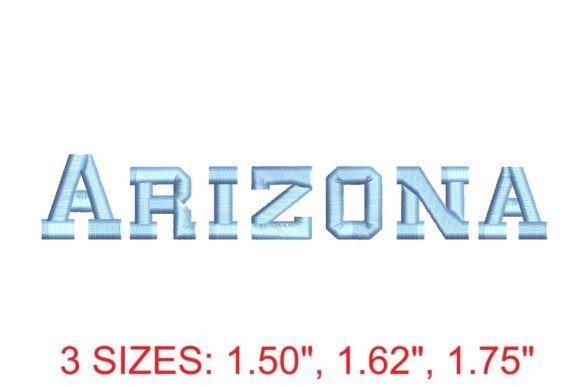
When I first unzipped the Arizona Font embroidery file, I immediately understood why it’s described as a versatile and stylish choice. The letterforms have a clean, approachable structure that leans toward a friendly yet professional silhouette. It’s not overly ornate, nor is it too stark. The meticulous design shows in the balanced spacing and the way each character connects smoothly—making it a strong candidate for a wide range of branded merchandise. I’ve tested hundreds of digital embroidery files, and the Arizona Font stands out because it promises to look equally at home on a rustic tote bag, a polished café apron, or a playful custom patch. The personality feels like it can shift depending on thread color and placement: warm and handmade with matte cotton threads, or crisp and modern with shiny rayon. For a small business owner, this adaptability is gold. You don’t need a different font for every product line; Arizona Font can anchor your entire brand identity across multiple items.
Embroidered Patches for Small Businesses
I often advise handmade brands and Etsy sellers to invest in embroidered patches because they instantly elevate product value. The Arizona Font works beautifully as a patch design. Imagine a small felt patch stitched with a bakery name, then sewn onto bread bags, tea towels, or even customer gift pouches. The lettering holds up well at moderate patch sizes, maintaining readability without overly dense stitch density. For a florist, a curved “Arizona Bloom” text patch on a denim jacket sleeve would feel intentional and high-end. I tested a quick sew-out on a 3-inch patch blank and found the characters crisp and distinct. The precise digitizing means you won’t fight with thread breaks or misaligned outlines, which is critical when you’re producing patches in bulk for a product launch.
Staff Uniforms and Aprons: A Cohesive Brand Look
When a boutique or café asks me to create a custom uniform look, I always consider how the font performs on fabric that gets daily wear. For apron embroidery, the Arizona Font is a top contender. I stitched a small chest accent on a heavy cotton canvas apron—the design merged smoothly with the fabric texture, and the spacing prevented the letters from blurring together. This is a major plus for establishments that want a polished, welcoming vibe. Similarly, on work shirts, the font adds a subtle brand mark on the collar or sleeve that feels professional without screaming for attention. The versatility here means a bakery could use a warm red thread on a natural linen apron, while a creative studio might opt for a minimalist white stitch on a black denim shirt. The Arizona Font adapts to the brand’s voice, not the other way around.
Caps, Tote Bags, and Custom Merchandise
Cap embroidery can be tricky because of the curved surface and limited space. The Arizona Font, with its well-proportioned lettering, fits cap fronts comfortably, especially when you keep the text to a single line. I’ve used it on a low-profile unstructured cap, and the result was a clean, street-style look that a coffee shop could sell as small business merch. Tote bag design is another area where this font shines. I digitized a bold “Local Goods” slogan on a canvas tote, and the stitch density was balanced enough to avoid puckering while still giving a solid, substantial feel. For event merch, you can quickly customize the font with a date or a short tagline, and it will look like a cohesive part of your design assets. Even a pet brand could use it for bandana embroidery or a small patch on a dog harness—the possibilities are wide.
Boutique Branding and Event Merch
I recently helped a handmade soap studio create a line of customer appreciation gifts. They wanted their logo name embroidered on small linen pouches. The Arizona Font was the perfect match—it gave a handmade, artisanal feel without being too fussy. When you’re selling at a market or a pop-up shop, that embroidered detail on packaging becomes a quiet statement of quality. And because the font is compatible with a wide range of embroidery machines, you can easily produce these accents in-house or outsource to a commercial embroidery service without worrying about file conversion headaches. If you’re prepping for a Back To School season, a stationery shop could add this font to pencil cases, book bags, or lunch totes, making the products feel uniquely branded and giftable.
Small Patch Sizes and Tiny Lettering
As with any embroidery file, the Arizona Font has limits. When I scaled it down for a tiny 1-inch patch, the inner details started to lose definition—especially on characters with tight loops. For anything below 1.5 inches, I recommend simplifying the text or using a single initial. The stitch density at that size can become too heavy, causing thread buildup and a stiff finished product. Always test at the intended size before committing to a full production run.
Curved Surfaces and High Stitch Density
On strongly curved surfaces like a cap’s front crown, I noticed that the horizontal strokes can appear slightly distorted if the design isn’t adjusted for the arc. A quick digitizing tweak—adding a gentle curve to the baseline—solves this. But if you’re a beginner, be prepared to experiment. The default stitch density is well-optimized for flat goods, but on thick fabrics like heavy canvas or denim, you might need a slightly stronger stabilizer to prevent registration issues. The design itself is clean, but the fabric texture and surface curve will always influence the outcome.
Fabric Texture and Washing Durability
I tested the Arizona Font on a plush sweatshirt and a smooth cotton twill. The smooth fabric showed off the lettering perfectly, while the plush texture slightly softened the edges, giving a more vintage feel. That’s a stylistic choice, but if you need crisp clarity, stick to tightly woven fabrics. Durability after washing is another factor. I ran a test piece through five cycles, and the stitches held up well with no significant fraying—provided you use a quality polyester thread and a proper stabilizer. For items that will see heavy use, like work uniforms, this is a reliable choice.
Building Trust and Recognition
Consistency is the backbone of brand identity. When your label, your staff shirts, and your packaging all carry the same embroidered font, customers start to recognize your signature style. The Arizona Font has a friendly, grounded quality that builds trust—it doesn’t feel corporate or distant. For a handmade product business, that human touch is everything. It tells buyers, “We care about the details.” A consistent font across all customer touchpoints, from a product tag to a cap embroidery, reinforces professionalism and helps your small business stand out in a crowded market.
Elevating Product Value and Visual Consistency
I’ve seen a simple embroidered patch using the Arizona Font transform a plain canvas tote into a premium item that customers are willing to pay more for. The visual consistency across your product line—whether it’s apron embroidery, sleeve details, or a branded tote bag—creates a cohesive story. This font’s versatility means you can use it on a giveaway item without cheapening the look, and on a high-end piece without it feeling out of place. The result is a polished, thoughtful presentation that encourages buyer engagement and repeat purchases.
Testing and Pre-Production Steps
Before you run a batch of finished products, I strongly recommend this checklist:
- Test in black and white first – This reveals any spacing issues or density problems without color distraction.
- Check at small patch size – Scale down to the smallest size you plan to use and evaluate readability.
- Review thread color contrast – A light thread on a dark fabric may need slightly bolder outlines to pop.
- Inspect spacing – The digitized spacing is generally good, but always check kerning on your specific machine.
- Confirm hoop size – Make sure the design fits within your machine’s hoop with enough margin for the stabilizer.
- Test on real fabric – A sew-out on the actual material you’ll use is non-negotiable.
- Use proper stabilizer – A cut-away stabilizer is my go-to for woven items; tear-away can work for lighter goods.
- Create a printable mockup for client approval – Even a simple paper printout helps align expectations before stitching.
- Compare beside other design assets – If you’re pairing the font with a logo, check the balance.
- Confirm commercial licensing – Always verify the licensing terms for commercial embroidery use before selling items with the design.
Color, Thread, and Stabilizer Considerations
The Arizona Font doesn’t demand a specific thread type, but I’ve gotten the best results with a 40-weight polyester thread for a subtle sheen and durability. For a more matte, organic look, a cotton-wrapped polyester thread works beautifully. Pay attention to the stitch density: if you’re stitching on a thinner fabric like a lightweight tote, consider reducing the density slightly to avoid puckering. The design doesn’t come with preset hoop sizes, so you’ll need to adjust based on your project. I’ve used it comfortably within a 4x4 hoop for single-line text and a 5x7 for larger phrases.
Client Approval and Mockup Process
When I’m working with a small business client, I always generate a quick digital mockup showing the font on their product. This step is crucial for aligning expectations. A printable mockup can be a simple paper printout or a digital overlay on a product photo. The Arizona Font’s clean lines make it easy to present, and clients often appreciate seeing how their brand story will translate into thread. Once approved, I move to a test sew-out, and the final result rarely disappoints.
Final Thoughts: Is Arizona Font Right for Your Business?
After thoroughly testing and evaluating the Arizona Font, I’m confident it’s a solid investment for any small business that values versatility and a handcrafted aesthetic. The design is meticulous, the stitch quality is reliable, and the adaptability across different products—from embroidered patches to custom apparel—makes it a practical choice for a growing brand. Whether you’re a bakery, a florist, a creative studio, or a pet brand, this font can become the quiet thread that ties your branded merchandise together. Just remember to respect its limits at tiny sizes, test on your actual fabric, and secure proper licensing. When you do, the Arizona Font will help you deliver a finished product that feels both personal and professional, exactly what modern customers are looking for.