Changmai Hostel Embroidery Font
A Designer’s First Stitch with Changmai Hostel Embroidery Font
As an embroidery designer who’s stitched over 3,000 personalized gifts—from baby blankets for new parents to wedding keepsakes for couples saying “I do”—I approach every new machine embroidery design with equal parts curiosity and caution. When I first opened the Changmai Hostel Embroidery Font, I wasn’t just scanning for letterforms—I was asking: Does this feel like something a customer would choose to remember a milestone? Does it hold up under real-world stitching conditions? And most importantly—does it tell a story before the first thread is even cut?
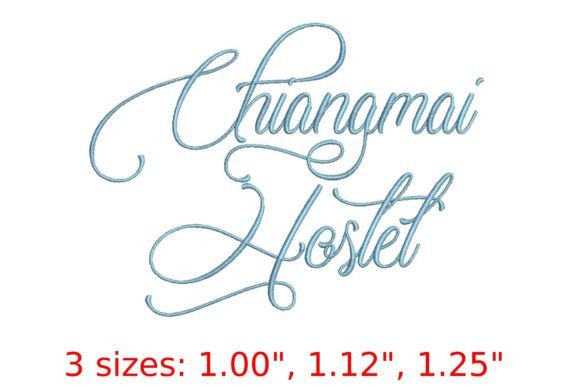
The answer is yes—warmly, authentically, and with quiet confidence. This isn’t a flashy script or an overly ornate calligraphy. It’s friendly. Slightly rounded. Lightly imperfect—like handwriting you’d see on a chalkboard at a cozy café in Chiang Mai. There’s a gentle bounce to the ascenders, soft curves on the lowercase ‘e’ and ‘a’, and subtle variations in stroke weight that whisper “handmade,” not “mass-produced.” It feels modern without being cold, playful without sacrificing legibility, and romantic without leaning into cliché.
Where Changmai Hostel Embroidery Font Truly Shines
This font excels where emotional resonance meets practicality—especially for small shop owners and Etsy sellers building curated collections of meaningful handmade products.
- Baby embroidery: Imagine “Luna” stitched onto a gauzy muslin blanket or “Welcome Home, Leo” on a bamboo onesie. The softness of the letterforms mirrors the tenderness of early parenthood—and avoids the stiffness some scripts impose on delicate baby items.
- Wedding gifts & family keepsakes: A linen pillow cover embroidered with “Esther & James • Chiang Mai • 2024” carries warmth and wanderlust. The font’s travel-inspired charm adds narrative depth without needing extra embellishment.
- Personalized towels & kitchen linens: On a heavyweight cotton towel, the Changmai Hostel Embroidery Font reads clearly at 3–4 inches tall—ideal for monogrammed guest towels or “The Smith Kitchen” aprons sold at craft fairs.
- Nursery decor & tote bags: Its balance of charm and clarity makes it perfect for name labels on wooden blocks, custom canvas totes for Back To School, or framed embroidery hoops styled as wall art.
Smart Placement Matters—Here’s Where to Pause
Like any thoughtful embroidery file, the Changmai Hostel Embroidery Font rewards intentionality—not just enthusiasm. Here’s where I recommend extra care:
- Small lettering: Below 1.5 inches in height, fine details (like the inner curve of the ‘g’) may blur or stitch unevenly—especially on textured fabric. Always test at your target size.
- Stretchy or thin fabrics: Baby knits, jersey, or lightweight voile need excellent stabilizer support. The font’s flowing lines demand stability to prevent puckering.
- Dark or dense fabrics: On black terry cloth or charcoal linen, contrast becomes critical. Choose high-visibility thread colors—cream, oat, or pale sage often outperform stark white.
- Curved surfaces & seams: Avoid placing tight curves (like the ‘s’ or ‘b’) directly over pillow cover corners or tote bag gussets—they’ll distort during hooping or wear.
- Frequent-wash items: For embroidered towels or baby blankets, confirm stitch density supports durability. Overly open fills may snag; overly dense ones stiffen fabric.
Why This Font Builds Trust—and Sales
In my decade of selling custom embroidery, I’ve learned customers don’t buy fonts—they buy feelings. The Changmai Hostel Embroidery Font delivers three quiet but powerful signals: thoughtful, travel-infused, and handmade. That perception lifts perceived value instantly.
When a bride sees her initials stitched in this font on a bridal robe mockup, she doesn’t just see letters—she sees ease, personality, and intention. When a grandparent orders a “Grandma’s Kitchen” towel, the font’s warmth reinforces love, not logistics. And for Etsy sellers, using this digital embroidery file in product photography creates cohesion across listings—helping shoppers recognize your brand’s aesthetic before they even read the description.
It also invites engagement. Customers regularly ask, *“What’s the story behind this font?”*—which opens space for storytelling in your shop bio, packaging inserts, or social captions. That human connection builds loyalty far beyond a single order.
Practical Notes Before You Stitch
Before adding the Changmai Hostel Embroidery Font to live listings or fulfilling a custom embroidery order, here’s my quick checklist—honed from years of avoiding rework:
- Test on scrap fabric matching your final product’s weight and texture—even if it’s just a 2-inch sample.
- Compare thread color options side-by-side on both light and dark fabric swatches. Print a printable mockup to preview contrast before stitching.
- Confirm hoop size compatibility. Some letter combinations may require larger hoops than expected—especially with extended spacing.
- Use appropriate stabilizer: tear-away for stable wovens, cut-away for knits, and water-soluble for delicate lace overlays.
- After stitching, inspect small details under natural light—not just screen previews. What looks crisp digitally may soften in thread.
- Verify commercial licensing terms. As a small shop product or digital embroidery file seller, you’ll want clear permission for resale of finished embroidered goods.
Final Thought: More Than Just Letters
The Changmai Hostel Embroidery Font doesn’t shout. It leans in. It fits naturally on a linen tea towel gifted to a teacher, a baby’s first backpack for Back To School, or a wedding guest book signed in thread instead of ink. It reminds us that personalization isn’t just about names—it’s about tone, texture, and the quiet joy of choosing something that feels like them.
If you’re curating a collection of personalized gifts—whether for baby embroidery, wedding gift suites, or handmade product lines—this font earns its place not as decoration, but as a trusted collaborator in storytelling. Stitch thoughtfully. Test generously. And let the charm speak for itself.