Circle Monogram: A Craft Fair Designer’s Real-World Review
First Impression: Clean, Customizable, and Quietly Premium
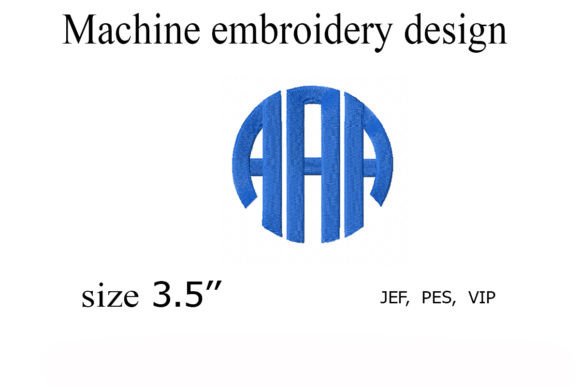
As an embroidery designer who’s packed 17 craft fair booths in the past five years—and shipped over 3,000 custom monogrammed pieces—I opened Circle Monogram expecting simplicity. What I found was smarter than it first appears: a set of 26 letters, each offered in left, center, and right configurations. That’s not just variety—it’s built-in flexibility for initials, names, and even playful abbreviations (think “J + M + C” for a trio of siblings or “A + B + C” for a boutique’s founding year). Visually, Circle Monogram reads as modern-minimal with gentle curves and balanced negative space—neither too dainty nor overly bold. It leans elegant but stays approachable: perfect for Back To School shoppers wanting personalized backpacks, lunch totes, or teacher appreciation gifts without shouting “monogram.”
Where It Shines on Craft Fair Products
On tote bag design, Circle Monogram anchors beautifully near the bottom corner—large enough to read at arm’s length, small enough to leave room for hand-stitched handles or fabric labels. As apron embroidery, it lands cleanly above the pocket, especially on denim or linen blends where the circular framing softens industrial edges. For tea towel embroidery, the central letter works best—crisp against textured cotton, legible even when folded on a market table. On curved surfaces like caps, stick to the center letter only; left/right variants distort unless hooped with precision and stabilizer support.
Embroidered patches are where Circle Monogram truly earns its keep. The clean lines hold up in 2.5"–3" sizes, and the modular set lets you pre-stitch batches of “A,” “B,” and “C” to assemble custom orders on-site. Likewise, fabric pouches and pillow covers benefit from its scale versatility—small enough for a 4" square, bold enough to command attention on an 18" cushion. And yes—it photographs exceptionally well for Etsy seller listings: minimal background needed, consistent lighting flatters the stitch definition, and the circular shape naturally draws the eye in thumbnails.
What Makes It Sell—And What Slows It Down
This isn’t a “set it and forget it” digital embroidery file. Its strength is customization—but that means your booth signage, mockups, and product tags must clearly explain how it works. Customers won’t intuitively know “left/center/right” unless you show them—so include a simple printed guide or demo tote with three versions stitched side-by-side. As a handmade product, Circle Monogram feels intentional and elevated—not generic. Buyers associate that polish with higher perceived value, especially for small shop product gifting (think “first day of school” bundles or new teacher kits).
But be honest: it’s not universally forgiving. On thick, napped fabrics like canvas market bags or terry cloth towels, dense stitch areas can puff or blur fine curves. Tiny inner loops in letters like “e” or “a” may collapse without proper stabilizer—or vanish entirely on dark fabric if thread contrast isn’t tested. And while it scales well up to 4", avoid shrinking below 1.75": the spacing between elements tightens, and legibility suffers on commercial embroidery runs where speed often trumps nuance.
Production Notes Every Embroidery Designer Should Check
- Test on scrap fabric first—especially with your most common booth materials (canvas totes, unbleached linen, twill caps).
- Check thread contrast on both light and dark substrates before stitching 20+ units.
- Review spacing and kerning between letters when assembling full monograms—some combos (like “WV” or “TO”) need manual adjustment.
- Confirm hoop size compatibility—if your machine requires frequent re-hooping for multi-letter layouts, factor that into booth-time estimates.
- Inspect stitch density—tight curves shouldn’t exceed 12,000 stitches per letter unless your stabilizer and fabric can handle it.
- Use cutaway or tear-away stabilizer depending on fabric texture; skip basic fusible for anything with stretch or nap.
- Create at least one real mockup—not just a printable mockup, but a finished tote or apron you can hold, fold, and photograph under fair lighting.
- Compare fabric colors side-by-side: ivory thread on oatmeal linen reads warmer than on cream cotton—subtle, but it affects brand consistency.
- Confirm commercial licensing before selling finished products—this machine embroidery design is for physical goods, not resale of the file itself.
Booth Impact & Buyer Engagement
In a crowded craft fair aisle, Circle Monogram doesn’t shout—but it lingers. Its quiet confidence draws buyers who pause, tilt their head, and say, “Oh, I could use that for my daughter’s lunchbox.” That’s engagement gold. When paired with cohesive design assets—matching thank-you cards, branded tissue paper, and a chalkboard sign showing “Monogram Your Back To School Gear”—it reinforces handmade quality and thoughtful curation. Unlike script fonts that alienate non-native English speakers or overly decorative motifs that date quickly, Circle Monogram feels timeless, inclusive, and quietly luxurious.
Final Verdict for Creative Entrepreneurs
If you sell embroidered patch sets, personalize tote bag design, or build small shop product collections around seasonal themes like Back To School, Circle Monogram is a high-leverage embroidery file. It’s not flashy—but it’s reliable, repeatable, and resonates across age groups and aesthetics. Just remember: its power lies in how you present it. Don’t just sell a letter—you’re selling personalization, intention, and the quiet pride of something made just for them. And in a world of mass-produced sameness? That’s the most compelling craft fair product of all.