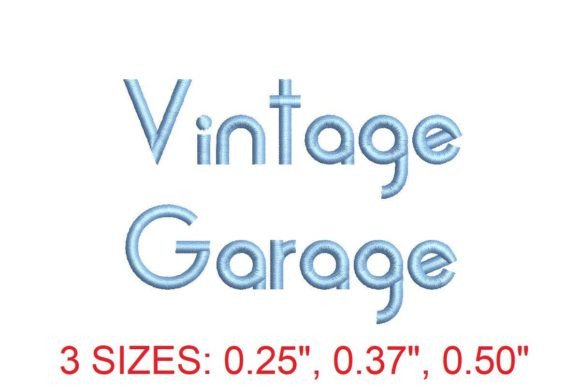
Vintage Garage Embroidery Font
A Nostalgic Anchor for Seasonal & Holiday Collections
As an embroidery designer who’s built holiday product lines for over a decade—from Christmas markets to Etsy bestsellers—I opened Vintage Garage Embroidery Font expecting charm. What I found was more: a cohesive, emotionally resonant typographic voice that lands squarely between nostalgic and timeless. It doesn’t shout “vintage”—it leans in with quiet confidence: slightly weathered serifs, balanced letter spacing, and subtle weight variation that reads beautifully at 3” and holds integrity even scaled to 6”. The tone is warm, approachable, and quietly confident—neither overly rustic nor aggressively retro. It feels cozy without leaning into kitsch, elegant without stiffness, and playful without sacrificing legibility. For seasonal embroidery, that balance is gold.
Where It Shines: Real Holiday Product Applications
Vintage Garage Embroidery Font thrives where personality meets purpose. On heavyweight cotton sweatshirts? Instant heirloom energy—ideal for family matching sets (“The Millers • Est. 1987”) or personalized holiday crewnecks. On natural linen tote bags? It elevates grocery runs into curated gifting—think “Merry & Marmalade” stitched beside hand-drawn citrus motifs. For kitchen towel embroidery, its clean-yet-characterful lines hold up against steam, splashes, and repeated washing—especially when paired with muted thread colors like oatmeal, charcoal, or burnt sienna. Pillow covers gain instant warmth; ornaments feel collectible rather than disposable; embroidered patches become conversation starters on denim jackets or backpacks.
This font also performs exceptionally well in bundled offerings: a “Cozy Holiday Kit” (towel + apron + oven mitt) unified by consistent typography builds trust and visual cohesion. As an Etsy seller, I’ve seen listings using Vintage Garage Embroidery Font convert faster—not just because it looks good, but because buyers *recognize* the intention behind it: thoughtfulness, craftsmanship, and seasonally grounded storytelling. On social media previews and printable mockups, it stands out in crowded feeds without relying on trend-chasing filters or over-designed layouts. And yes—it works beautifully for Back To School too: think teacher appreciation totes (“World’s Okayest First Grade Teacher”), library-themed pillow covers, or monogrammed lunchbox linings that whisper vintage charm instead of screaming novelty.
Smart Use Cases for Gifting & Emotional Connection
Holiday shoppers don’t buy letters—they buy meaning. Vintage Garage Embroidery Font taps directly into that. Its nostalgic tone triggers memory and comfort, making personalized gifts feel intimate and intentional. A baby onesie reading “Little Mechanic • Born 2024” carries gentle humor and enduring warmth. A set of embroidered table linens stamped with “Gather • Give • Grateful” invites ritual and reflection—not just decoration. That emotional resonance lifts perceived value: customers pay more for handmade gifts that feel *curated*, not mass-produced. It also strengthens brand consistency across seasonal drops—if your shop uses this font for Thanksgiving aprons, it’ll feel authentically connected to your Christmas ornament line or Valentine’s Day pillow covers.
For small shop owners, that consistency builds recognition fast. Repeat buyers begin associating Vintage Garage Embroidery Font with quality, care, and seasonal reliability. In craft fair displays, it helps products stand out on crowded tables—not through flash, but through calm, confident presence. And because it avoids overly narrow or delicate strokes, it photographs cleanly for digital storefronts and email campaigns, supporting strong engagement during peak holiday shopping windows.
Where to Proceed Thoughtfully
Like any strong design tool, Vintage Garage Embroidery Font rewards intentionality. Avoid using it for ultra-small hoop applications (under 2.5”) unless you’ve tested stitch density and thread pull—fine serifs may blur or lose definition on dense fabrics like thick terry cloth or heavy canvas. On dark fabric, test thread colors thoroughly: matte cottons often mute contrast, while rayon can add unexpected sheen. Metallic thread is possible but demands slower machine speeds and stabilizer reinforcement—don’t assume compatibility without a physical test run.
Be mindful on stretchy garments (knits, ribbed cuffs) and curved surfaces (baseball caps, curved tote handles). The font’s structure handles moderate curves gracefully, but tight radii require digitizing adjustments most ready-to-use embroidery files won’t include. Also, verify commercial licensing before selling finished products—this is non-negotiable for Etsy sellers and small business owners scaling seasonal collections.
Designer Notes You’ll Want to Keep Handy
- Always test on both light and dark fabric—thread behavior changes dramatically with substrate.
- Check stitch density before scaling: high-density areas may pucker on lightweight cotton or linen.
- Confirm hoop size requirements—some versions may need larger hoops for full-word phrases.
- Use cutaway or tear-away stabilizer appropriately: cutaway for knits and towels, tear-away for stable wovens.
- Create realistic mockups—not just flat PNGs, but draped sweatshirt renders or folded towel shots.
- Review small details post-stitching: serifs, crossbars, and spacing should remain crisp and legible.
- Plan thread color palettes in advance: earthy neutrals, faded jewel tones, and creamy off-whites complement its character best.
- Verify commercial use rights before listing on Etsy or producing wholesale holiday inventory.
In short, Vintage Garage Embroidery Font isn’t just another digital embroidery file—it’s a strategic seasonal asset. It bridges nostalgia and now, craftsmanship and commerce, personalization and broad appeal. When used intentionally, it transforms everyday items into meaningful, giftable moments—and that’s exactly what holiday shoppers are searching for.